There are a couple of key things to look at when starting a hosting company.
Basically there are four major factors
to look at provided you have the
servers, and technical abilities.
1. Site design is the first thing a prospective
customer sees!! I have seen some horrible designs
for hosting
companies. If you think putting some
text, links and a logo on a page is enough, you
will likely fail before you even realize. You
will also notice a lot of companies have a generic
template that can be found online at
templetemonster or any other temple
site. Avoid these. It is very hard to
develop a company image when you look
like 134,000 other hosting companies. I suggest
put a bit of effort and creativity into a well
designed “professional” looking home
page for your company. The bottom line is a new
customer will not even consider you as their
host if they feel you are an armature
no matter how great or cheap your
packages are.
2. Develop your website as a total package to it’s clients. Don’t just present your hosting
packages and leave it at that. Offer
tutorials, articles, support forums
etc. These additional services not only
provide additional content for you
clients, but if developed correctly will bring
additional traffic to your site which will potentially lead to more sales.
3 You MUST understand how search engines work.
Over 90% of your business will likely come directly
from search engine results. Therefore, it is
absolutely essential to optimize your
site for search engines. You could have
the greatest hosting plan in the
entire world, but if no one knows about it, then
it’s useless. Do a search on google for Search Engine Optimization (SEO). You will find tons of great information on how to create a website
that is both user friendly and search
engine friendly. There are also a
countless number of companies out there
who offer SEO services. Just be cautious
of their offers and do your research first
3. Find your niche. The hosting business
as a whole is a huge industry which is
very competitive. Your best chance at
success is to simply find a market and
develop your business to cater to that
specific niche.
Maybe in the early 90’s the idea of “if
you build it they will come” might have
been true. But in the year 2005 the internet
is a far more competitive and complex place.
To be successful today, you have to develop
a business plan which works from all angels. If you can develop a hosting company
which has a professional design,
some extra content, search engine
friendly and which targets a specific
niche, you will have a far greater chance at
success Of course there are many other factors
to consider as well, but if you can master these
four, everything else should fall into
place.
Tuesday, 2 October 2012

Friday, 21 September 2012
Dawn Sees Hydrated Minerals On Giant Asteroid

Pothole-like features mark some of the asteroid's surface where the volatiles, likely water, released from hydrated minerals boiled off. While Dawn did not find actual water ice at Vesta, there are signs of hydrated minerals delivered by meteorites and dust evident in the giant asteroid's chemistry and geology. The findings appear today in the journal Science.
One paper, led by Thomas Prettyman, the lead scientist for Dawn's gamma ray and neutron detector (GRaND) at the Planetary Science Institute in Tucson, Ariz., describes how the instrument found signatures of hydrogen, likely in the form of hydroxyl or water bound to minerals in Vesta's surface.
"The source of the hydrogen within Vesta's surface appears to be hydrated minerals delivered by carbon-rich space rocks that collided with Vesta at speeds slow enough to preserve their volatile content," said Prettyman.
A complementary paper, led by Brett Denevi, a Dawn participating scientist based at the Johns Hopkins University Applied Physics Laboratory in Laurel, Md., describes the presence of pitted terrain created by the release of the volatiles.
Vesta is the second most massive member of the main asteroid belt. The orbit at which these data were obtained averaged about 130 miles (210 kilometers) above the surface. Dawn left Vesta earlier this month, on Sept. 4 PDT (Sept. 5 EDT), and is now on its way to its second target, the dwarf planet Ceres.
Scientists thought it might be possible for water ice to survive near the surface around the giant asteroid's poles. Unlike Earth's moon, however, Vesta has no permanently shadowed polar regions where ice might survive. The strongest signature for hydrogen in the latest data came from regions near the equator, where water ice is not stable.
In some cases, other space rocks crashed into these deposits later at high speed. The heat from the collisions converted the hydrogen bound to the minerals into water, which evaporated. The holes that were left as the water escaped stretch as much as 0.6 miles (1 kilometer) across and go down as deep as 700 feet (200 meters). Seen in images from Dawn's framing camera, this pitted terrain is best preserved in sections of Marcia crater.
"The pits look just like features seen on Mars, but while water was common on Mars, it was totally unexpected on Vesta in these high abundances," said Denevi. "These results provide evidence that not only were hydrated materials present, but they played an important role in shaping the asteroid's geology and the surface we see today."
GRaND's data are the first direct measurements describing the elemental composition of Vesta's surface. Dawn's elemental investigation by the instrument determined the ratios of iron to oxygen and iron to silicon in the surface materials. The new findings solidly confirm the connection between Vesta and a class of meteorites found on Earth called the Howardite, Eucrite and Diogenite meteorites, which have the same ratios for these elements. In addition, more volatile-rich fragments of other objects have been identified in these meteorites, which supports the idea that the volatile-rich material was deposited on Vesta.
The Dawn mission is managed by the Jet Propulsion Laboratory for NASA's Science Mission Directorate, Washington. It is a project of the Discovery Program managed by NASA's Marshall Space Flight Center, Huntsville, Ala. UCLA is responsible for overall mission science. Orbital Sciences Corporation of Dulles, Va., designed and built the Dawn spacecraft.
The framing cameras were developed and built under the leadership of the Max Planck Institute for Solar System Research, Katlenburg-Lindau, Germany, with contributions by the German Aerospace Center (DLR) Institute of Planetary Research, Berlin, and in coordination with the Institute of Computer and Communication Network Engineering, Braunschweig. The framing camera project is funded by the Max Planck Society, DLR and NASA. The gamma ray and neutron detector instrument was built by Los Alamos National Laboratory, N.M., and is operated by the Planetary Science Institute, Tucson, Ariz.
JPL is a division of the California Institute of Technology, Pasadena.
Physicists Reveal Striking Similarities in Sporting Performance
Finding the similarities between volleyball and snooker may seem quite
tricky. However, a group of physicists have found that the spread of
scores, otherwise known as distribution, across their ranking systems
are almost identical.
They've also shown that this is the same for almost all sports, whether their ranking systems are based on points or the earnings of each individual or team.
Publishing their study September 21 in the Institute of Physics and German Physical Society's New Journal of Physics, the researchers came to this conclusion by statistically analysing the ranking systems across 12 different sports: tennis, golf, table tennis, volleyball, football, snooker, badminton, basketball, baseball, hockey, handball and fencing.
Rankings are a direct measure of a player or a team's performance and come in different forms. Some sports are ranked using a points system, while others are ranked using earnings. By statistically analysing the rankings and plotting them onto graphs, the researchers found that the distributions for each sport were almost identical.
The reason why the ranking systems have a common distribution is unknown and is the latest example of a phenomenon that abides by the mysterious 'power laws' -- a term used to describe phenomena where large events are rare and small events are common.
In the past, research has shown that the frequency of words in different texts, the size of cities and people's income all abide by the same power law.
Co-author of the study, Dr Wei Li, said: "Let's take human wealth. The chance of being a billionaire is small, but not zero as we see thousands of them in the world. At the same time, the chance of being poor is very high. We call this distribution a power law and, for some unknown reason, witness exactly the same distribution in other everyday phenomena.
"The sports ranking systems we analysed all follow similar power-laws."
The researchers, from Hua-Zhong Normal University, ISMANS (LUNAM Université), Université de Maine and Max-Planck Institute for Mathematics in the Sciences, also found that the sport rankings agree with a maxim known as the Pareto principle.
Also known as the 80-20 rule, this states that, for many events, roughly 80 per cent of the effects come from 20 per cent of the causes. Vilfredo Pareto noticed this in 1906 when he found that 80 per cent of Italy's land was owned by 20 per cent of the population. The rule also applied to a variety of other countries he analysed.
In all of the sports analysed, 20 per cent of the players possessed 80 per cent of the total scores of the whole system.
"We all want to be the best or at least one of the best in some aspects. A businessman wants to be Bill Gates; a model wants to be Cindy Crawford; a tennis player wants to be Roger Federer. The idea of ranking is ubiquitous throughout our human society and we have found that for a number of sports, there is a similar law which dictates how these rankings pan out," continued Dr Li.
They've also shown that this is the same for almost all sports, whether their ranking systems are based on points or the earnings of each individual or team.
Publishing their study September 21 in the Institute of Physics and German Physical Society's New Journal of Physics, the researchers came to this conclusion by statistically analysing the ranking systems across 12 different sports: tennis, golf, table tennis, volleyball, football, snooker, badminton, basketball, baseball, hockey, handball and fencing.
Rankings are a direct measure of a player or a team's performance and come in different forms. Some sports are ranked using a points system, while others are ranked using earnings. By statistically analysing the rankings and plotting them onto graphs, the researchers found that the distributions for each sport were almost identical.
The reason why the ranking systems have a common distribution is unknown and is the latest example of a phenomenon that abides by the mysterious 'power laws' -- a term used to describe phenomena where large events are rare and small events are common.
In the past, research has shown that the frequency of words in different texts, the size of cities and people's income all abide by the same power law.
Co-author of the study, Dr Wei Li, said: "Let's take human wealth. The chance of being a billionaire is small, but not zero as we see thousands of them in the world. At the same time, the chance of being poor is very high. We call this distribution a power law and, for some unknown reason, witness exactly the same distribution in other everyday phenomena.
"The sports ranking systems we analysed all follow similar power-laws."
The researchers, from Hua-Zhong Normal University, ISMANS (LUNAM Université), Université de Maine and Max-Planck Institute for Mathematics in the Sciences, also found that the sport rankings agree with a maxim known as the Pareto principle.
Also known as the 80-20 rule, this states that, for many events, roughly 80 per cent of the effects come from 20 per cent of the causes. Vilfredo Pareto noticed this in 1906 when he found that 80 per cent of Italy's land was owned by 20 per cent of the population. The rule also applied to a variety of other countries he analysed.
In all of the sports analysed, 20 per cent of the players possessed 80 per cent of the total scores of the whole system.
"We all want to be the best or at least one of the best in some aspects. A businessman wants to be Bill Gates; a model wants to be Cindy Crawford; a tennis player wants to be Roger Federer. The idea of ranking is ubiquitous throughout our human society and we have found that for a number of sports, there is a similar law which dictates how these rankings pan out," continued Dr Li.
'Half-Match' Bone Marrow Transplants Wipe out Sickle Cell Disease in Selected Patients
In a preliminary clinical trial, investigators at Johns Hopkins have
shown that even partially-matched bone marrow transplants can eliminate
sickle cell disease in some patients, ridding them of painful and
debilitating symptoms, and the need for a lifetime of pain medications
and blood transfusions. The researchers say the use of such marrow could
potentially help make bone marrow transplants accessible to a majority
of sickle cell patients who need them.
After a median follow-up of two years, the transplants successfully eliminated sickle cell disease in 11 of 17 patients. Three were fully matched to their donors and eight received half-matched donor marrow. All 11 patients are free of painful sickle cell crises and 10 no longer have anemia. There were no deaths and no unexpected toxicities.
Six of the 11 patients (all half-matched) have stopped taking immunosuppressive drugs, although some still require narcotics for chronic pain because of sickle cell-related organ damage. Blood tests on the six patients show that their red cells are now completely derived from their donor's marrow.
Patients with severe sickle cell disease (SCD) face shortened life spans, intractable pain and eventual organ damage as a result of their disease, an inherited disorder caused by a mistake in the oxygen-carrying hemoglobin molecules in red blood cells. The flawed genetic code stiffens red cells, and shapes them into a pronged "sickle" that clump and stick into blood vessel walls, cutting off blood and oxygen to tissues and organs throughout the body.
SCD occurs in approximately one in 400 African Americans, and rarely in Caucasians. An estimated 100,000 people are currently living with sickle cell disease in the U.S.
Most patients die before age 50, and many suffer poor quality of life with frequent episodes of "off-the-charts" pain, and an increased risk for kidney failure, stroke, deep-vein thrombosis, and lung disease.
Treatments include blood transfusions and a drug, hydroxyurea. Many patients use narcotics to control severe pain and have repeat hospitalizations. Bone marrow transplants have been successful in curing some cases, but matching donors are rare and the procedure itself poses risk.
In the current study, 17 patients at the Johns Hopkins Hospital were offered bone marrow transplant options, including the use of half-matched donor marrow to try and replace their "sickled" blood cells with new, healthy ones. The transplants were successful in 11 of the patients, of whom eight were only half-matches. Results of the trial were published in the Sept. 6 early online edition of Blood.
"We're trying to reformat the blood system and give patients new blood cells to replace the diseased ones, much like you would replace a computer's circuitry with an entirely new hard drive," says Robert Brodsky, M.D., director of the Division of Hematology at Johns Hopkins and The Johns Hopkins Family Professor of Medicine and Oncology. "While bone marrow transplants have long been known to cure sickle cell disease, only a small percentage of patients have fully matched, eligible donors."
National registries often are of little help in finding donors for sickle cell patients, because most of those in need are African American and other minorities who are vastly underrepresented in registries, say the Johns Hopkins researchers.
To overcome the shortage of donors, investigators at Johns Hopkins developed techniques, recently tested in leukemia and lymphoma patients, to transplant with bone marrow that is half-identical or "haploidentical" to the patient's tissue type. Half-matched bone marrow can be obtained from parents, children and most siblings, and is extracted by needle from the hip bone.
For the study, the Johns Hopkins team screened 19 patients to find bone marrow donors with either half-identical or fully matched tissue. Each transplant candidate had experienced many severe pain crises, significant organ problems, or had failed hydroxyruea, the only drug known to curtail sickle cell symptoms. The team found donors for 17 of the 19 patients: 14 were half-identical and three were fully matched siblings. The youngest patient was 15; the oldest 46.
Before each transplant, sickle cell patients received a "conditioning" regimen of low-dose immunosuppression drugs, low toxicity chemotherapy, and low-dose total body irradiation. Brodsky says this gentler approach to pre-transplant therapy has made transplant possible for sickle cell patients whose tissues and organs have been ravaged by the disease.
After the transplant, all patients received high doses of the chemotherapy drug cyclophosphamide, which kills remaining blood cells, including diseased sickled cells, and preserves the donor's stem cells responsible for making new, healthy cells.
Of the 17 patients, six transplants were not successful; however, because of the reduced intensity of the conditioning regimen, all of these patients recovered their own blood cells.
There were no deaths, some infections, and only slight skin-related graft versus host disease symptoms in one patient, which cleared without therapy, the researchers reported. Some brain swelling occurred in three patients during the conditioning period and resolved without neurologic damage.
The Johns Hopkins doctors say that while the majority of patients in the trial had successful transplants, about less than half did not.
"Sickle cell disease patients undergo multiple blood transfusions throughout their lives and may have acquired antibodies against many different blood types, making it more difficult than usual to give patients donated bone marrow." says Javier Bolaños-Meade, M.D., associate professor of oncology at the Johns Hopkins Kimmel Cancer Center and principal investigator of the study.
Improving the rate of engraftment in haploidentical transplants for sickle cell disease remains a challenge, they say, but the researchers are looking for additional ways to overcome it, including increasing the number of stem cells transplanted and using other immunosuppressant drugs during the transplant.
After a median follow-up of two years, the transplants successfully eliminated sickle cell disease in 11 of 17 patients. Three were fully matched to their donors and eight received half-matched donor marrow. All 11 patients are free of painful sickle cell crises and 10 no longer have anemia. There were no deaths and no unexpected toxicities.
Six of the 11 patients (all half-matched) have stopped taking immunosuppressive drugs, although some still require narcotics for chronic pain because of sickle cell-related organ damage. Blood tests on the six patients show that their red cells are now completely derived from their donor's marrow.
Patients with severe sickle cell disease (SCD) face shortened life spans, intractable pain and eventual organ damage as a result of their disease, an inherited disorder caused by a mistake in the oxygen-carrying hemoglobin molecules in red blood cells. The flawed genetic code stiffens red cells, and shapes them into a pronged "sickle" that clump and stick into blood vessel walls, cutting off blood and oxygen to tissues and organs throughout the body.
SCD occurs in approximately one in 400 African Americans, and rarely in Caucasians. An estimated 100,000 people are currently living with sickle cell disease in the U.S.
Most patients die before age 50, and many suffer poor quality of life with frequent episodes of "off-the-charts" pain, and an increased risk for kidney failure, stroke, deep-vein thrombosis, and lung disease.
Treatments include blood transfusions and a drug, hydroxyurea. Many patients use narcotics to control severe pain and have repeat hospitalizations. Bone marrow transplants have been successful in curing some cases, but matching donors are rare and the procedure itself poses risk.
In the current study, 17 patients at the Johns Hopkins Hospital were offered bone marrow transplant options, including the use of half-matched donor marrow to try and replace their "sickled" blood cells with new, healthy ones. The transplants were successful in 11 of the patients, of whom eight were only half-matches. Results of the trial were published in the Sept. 6 early online edition of Blood.
"We're trying to reformat the blood system and give patients new blood cells to replace the diseased ones, much like you would replace a computer's circuitry with an entirely new hard drive," says Robert Brodsky, M.D., director of the Division of Hematology at Johns Hopkins and The Johns Hopkins Family Professor of Medicine and Oncology. "While bone marrow transplants have long been known to cure sickle cell disease, only a small percentage of patients have fully matched, eligible donors."
National registries often are of little help in finding donors for sickle cell patients, because most of those in need are African American and other minorities who are vastly underrepresented in registries, say the Johns Hopkins researchers.
To overcome the shortage of donors, investigators at Johns Hopkins developed techniques, recently tested in leukemia and lymphoma patients, to transplant with bone marrow that is half-identical or "haploidentical" to the patient's tissue type. Half-matched bone marrow can be obtained from parents, children and most siblings, and is extracted by needle from the hip bone.
For the study, the Johns Hopkins team screened 19 patients to find bone marrow donors with either half-identical or fully matched tissue. Each transplant candidate had experienced many severe pain crises, significant organ problems, or had failed hydroxyruea, the only drug known to curtail sickle cell symptoms. The team found donors for 17 of the 19 patients: 14 were half-identical and three were fully matched siblings. The youngest patient was 15; the oldest 46.
Before each transplant, sickle cell patients received a "conditioning" regimen of low-dose immunosuppression drugs, low toxicity chemotherapy, and low-dose total body irradiation. Brodsky says this gentler approach to pre-transplant therapy has made transplant possible for sickle cell patients whose tissues and organs have been ravaged by the disease.
After the transplant, all patients received high doses of the chemotherapy drug cyclophosphamide, which kills remaining blood cells, including diseased sickled cells, and preserves the donor's stem cells responsible for making new, healthy cells.
Of the 17 patients, six transplants were not successful; however, because of the reduced intensity of the conditioning regimen, all of these patients recovered their own blood cells.
There were no deaths, some infections, and only slight skin-related graft versus host disease symptoms in one patient, which cleared without therapy, the researchers reported. Some brain swelling occurred in three patients during the conditioning period and resolved without neurologic damage.
The Johns Hopkins doctors say that while the majority of patients in the trial had successful transplants, about less than half did not.
"Sickle cell disease patients undergo multiple blood transfusions throughout their lives and may have acquired antibodies against many different blood types, making it more difficult than usual to give patients donated bone marrow." says Javier Bolaños-Meade, M.D., associate professor of oncology at the Johns Hopkins Kimmel Cancer Center and principal investigator of the study.
Improving the rate of engraftment in haploidentical transplants for sickle cell disease remains a challenge, they say, but the researchers are looking for additional ways to overcome it, including increasing the number of stem cells transplanted and using other immunosuppressant drugs during the transplant.
Bluetooth Shoes: A Newly Built Footwear For The Blind
I
stumbled upon this article, and think you should have a feel of what
technology can do. Now it's the time of the blind or
visually impaired people to be part of the technological moving trend!
Read and drop your comments.
MORE than 285m people across the globe suffer from visual impairment. Yet the tools to assist the blind in walking have changed little since the 1920s, when their canes started being painted white to make other pedestrians more aware of their presence. The gizmos that do exist have tended to be expensive and clunky, and have not caught on. This may change if Anirudh Sharma, a 24-year-old computer engineer from Hyderabad, a city in the Indian state of Andhra Pradesh, has his way.
His innovation, dubbed “Le Chal” ("take me along" in Hindi) pairs a smartphone app with a small actuator sewn inside the sole of one shoe via Bluetooth. The user tells the phone his desired destination, which is translated into electronic commands using voice-recognition software. The app, which can be programmed to run in the background, fetches the local map of the area. The phone’s Global Positioning System (GPS) tracks the person’s location in real-time, telling the actuator to vibrate when it is time to turn. The side of the shoe where the vibration is felt indicates which way to go. Mr Sharma opted for a vibrating signal because for the blind, who rely on their sense of hearing to make sense of the environment, audio feedback is a distraction.
 The system does not require
constant internet access. Once downloaded, maps can be stored locally
and combined with GPS data. The app uses Open Street Maps (OSM), an
open-source rival to Google Maps. OSM allows editing, a helpful feature
in updating rapidly changing urban landscapes. A speed-dial function can
rapidly retrieve the most frequently visited routes.
The system does not require
constant internet access. Once downloaded, maps can be stored locally
and combined with GPS data. The app uses Open Street Maps (OSM), an
open-source rival to Google Maps. OSM allows editing, a helpful feature
in updating rapidly changing urban landscapes. A speed-dial function can
rapidly retrieve the most frequently visited routes.
The shoe pod is also equipped with an obstacle-detection mechanism. A sensor in the tip of the shoe, devised by Mr Sharma’s business partner, Krispian Lawrence, scans the vicinity using sonar, which emits ultrasounds that bounce off obstacles, indicating their presence. The shoe sets off a distinct pattern of vibrations to alert the person of any obstruction and guides him around it.
For now, the footwear, being tested at the L.V. Prasad Eye Institute, one of India’s biggest eye-health facilities, may be most useful in areas with little or no traffic, such as quiet residential streets or parks. The challenge, Mr Lawrence says, is to get the algorithm to tell an uncovered manhole from a flight of stairs, but he expects it to be able to do so in due course. Dealing with moving obstacles like cars may take longer, though the pair are working on ways to alert wearers not just about cars' presence, but also their speed.
To ensure that the final product resembles a regular shoe, fashion technologists are being consulted to help with ergonomics and design. Mr Sharma and Mr Lawrence, who started a company called Ducere Technologies to commercialise their idea, say their high-tech brogues should not cost more than an ordinary, stylish pair. Many of the world's visually impaired will like the sound of that.
MORE than 285m people across the globe suffer from visual impairment. Yet the tools to assist the blind in walking have changed little since the 1920s, when their canes started being painted white to make other pedestrians more aware of their presence. The gizmos that do exist have tended to be expensive and clunky, and have not caught on. This may change if Anirudh Sharma, a 24-year-old computer engineer from Hyderabad, a city in the Indian state of Andhra Pradesh, has his way.
His innovation, dubbed “Le Chal” ("take me along" in Hindi) pairs a smartphone app with a small actuator sewn inside the sole of one shoe via Bluetooth. The user tells the phone his desired destination, which is translated into electronic commands using voice-recognition software. The app, which can be programmed to run in the background, fetches the local map of the area. The phone’s Global Positioning System (GPS) tracks the person’s location in real-time, telling the actuator to vibrate when it is time to turn. The side of the shoe where the vibration is felt indicates which way to go. Mr Sharma opted for a vibrating signal because for the blind, who rely on their sense of hearing to make sense of the environment, audio feedback is a distraction.
The shoe pod is also equipped with an obstacle-detection mechanism. A sensor in the tip of the shoe, devised by Mr Sharma’s business partner, Krispian Lawrence, scans the vicinity using sonar, which emits ultrasounds that bounce off obstacles, indicating their presence. The shoe sets off a distinct pattern of vibrations to alert the person of any obstruction and guides him around it.
For now, the footwear, being tested at the L.V. Prasad Eye Institute, one of India’s biggest eye-health facilities, may be most useful in areas with little or no traffic, such as quiet residential streets or parks. The challenge, Mr Lawrence says, is to get the algorithm to tell an uncovered manhole from a flight of stairs, but he expects it to be able to do so in due course. Dealing with moving obstacles like cars may take longer, though the pair are working on ways to alert wearers not just about cars' presence, but also their speed.
To ensure that the final product resembles a regular shoe, fashion technologists are being consulted to help with ergonomics and design. Mr Sharma and Mr Lawrence, who started a company called Ducere Technologies to commercialise their idea, say their high-tech brogues should not cost more than an ordinary, stylish pair. Many of the world's visually impaired will like the sound of that.
Samsung Galaxy S3 Surpasses Its 10million Sales Mark Earlier Than Predicted! [About 190,000 Of It Sold Every day]
Here it comes again! The global sales of Samsung Electronics popular demand "Galaxy S3 smartphones" have surpassed the 10 million mark sales predicted for it in less than two months after its official release in May, 25 2012.
Shin Jong-kyun, the president of Samsung's information technology and mobile communication division, made this known to reporters that the Android-powered smartphone had surpassed the 10 million sales mark earlier predicted for July 2012. He however, did not reveal specific sales figures, according to the Yonhap news agency. Doing the math, the report made by Shin Jong-kyun translates to about 190,000 Galaxy S3 devices sold every day for the past two months.
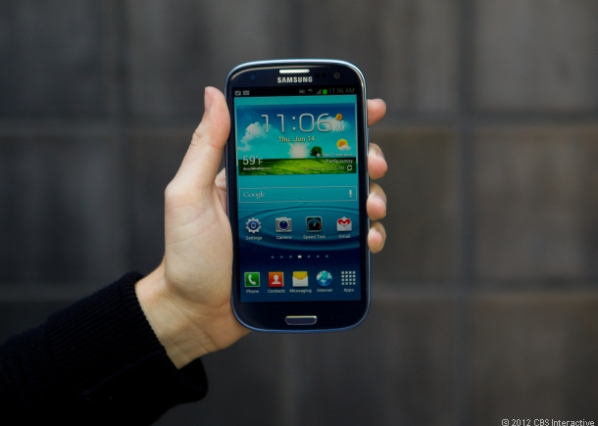 Earlier this month, if you can recall, I made a post on the sales mark prediction made by the Samsung Chief Executive that Galaxy S3 would sold up to 10million units before the end of July. The boss was however, proven otherwise when the smartphone hit the mark earlier that expected and still continued to sale.
What Sprint Says About Galaxy S3
Sprint, last month announced that due to the "overwhelming demand" of the Galaxy S3, that Samsung was forced to delay its handset's June 21 launch. Presently, the android-powered iPhone which is available through AT&T, Sprint, T-Mobile, and Verizon, is one of the most sought-after smartphones on the market.
The Galaxy S3, offers a dual-core processor, a 4.8-inch HD Super AMOLED display with a 1,280x720-pixel resolution. I already did an article on the full review. You can check out the Samsung Galaxy S3 Review
Samsung Galaxy S3 has been swept up in a patent battle between Apple and Samsung, with the iPhone maker attempting to secure an injunction against U.S. sales of the device, but that effort was tabled last month when Koh ruled there were already too many issues to consider.
Industry watchers said that since Samsung's main rival Apple Inc. is not expected to unveil its next generation iPhone until September or October, the Galaxy S3s sales should remain strong in the third quarter.
When Samsung Galaxy S3 was first launched in Nigeria, a tremendous rush and demand was experienced, and it has been like that till date. If you reside in Nigeria, and you wish to have a feel of this smartphone, you can check out the Samsung Mobile Dealers in Nigeria and how much it costs in Nigeria.
The Samsung's android smartphone, afterall, may mot be as perfect as ever! A study done on it has revealed "The Greatest No.1 Problem of Samsung Galaxy S3". You should read it!
Have you already been using this smartphone? Do you really think it's worth this sales? I will like to hear your thoughts in comments...
Shin Jong-kyun, the president of Samsung's information technology and mobile communication division, made this known to reporters that the Android-powered smartphone had surpassed the 10 million sales mark earlier predicted for July 2012. He however, did not reveal specific sales figures, according to the Yonhap news agency. Doing the math, the report made by Shin Jong-kyun translates to about 190,000 Galaxy S3 devices sold every day for the past two months.
What Sprint Says About Galaxy S3
Sprint, last month announced that due to the "overwhelming demand" of the Galaxy S3, that Samsung was forced to delay its handset's June 21 launch. Presently, the android-powered iPhone which is available through AT&T, Sprint, T-Mobile, and Verizon, is one of the most sought-after smartphones on the market.
The Galaxy S3, offers a dual-core processor, a 4.8-inch HD Super AMOLED display with a 1,280x720-pixel resolution. I already did an article on the full review. You can check out the Samsung Galaxy S3 Review
Samsung Galaxy S3 has been swept up in a patent battle between Apple and Samsung, with the iPhone maker attempting to secure an injunction against U.S. sales of the device, but that effort was tabled last month when Koh ruled there were already too many issues to consider.
Industry watchers said that since Samsung's main rival Apple Inc. is not expected to unveil its next generation iPhone until September or October, the Galaxy S3s sales should remain strong in the third quarter.
When Samsung Galaxy S3 was first launched in Nigeria, a tremendous rush and demand was experienced, and it has been like that till date. If you reside in Nigeria, and you wish to have a feel of this smartphone, you can check out the Samsung Mobile Dealers in Nigeria and how much it costs in Nigeria.
The Samsung's android smartphone, afterall, may mot be as perfect as ever! A study done on it has revealed "The Greatest No.1 Problem of Samsung Galaxy S3". You should read it!
Have you already been using this smartphone? Do you really think it's worth this sales? I will like to hear your thoughts in comments...
Nigeria's Low-Cost Tablet Computer "Inye" Featured On BBC's Series African Dream
 |
| Saheed Adepoju: I pitched the idea to my parents, who gave me £40,000 to start with |
Recently, the hand work of the 29-year-old entrepreneur was featured on the BBC's Series African Dream, where he disclosed some facts about the invention of the African low cost iPad.
According to the 29-year-old entrepreneur, his machine's key selling point is its price - $350 (£225) opposed to around $700 for an iPad. He believes that, because of this, there is a big market for it in Nigeria and elsewhere in Africa, particularly amongst students.
He is also hoping to sell his tablet - which runs on the Google Android operating system - to the Nigerian government and plans to have at least one computer in each local government area.
"The Inye is a mobile internet device. It gives you access to the internet; it allows you to play media files and watch movies. What we have is an 8-inch device, a device that is half-way between a laptop and a mobile phone," he told the BBC's series African Dream.
"You have the standard software applications that come pre-installed and then you have the ones that we are working with various local developers to bundle on," he added.
Among those local apps there is one designed to raise awareness about HIV and others related to water and sanitation.
"We work with local developers that have expertise in particular areas so that we don't end up doing so much work and we just have a collaborative way of doing things together," he said.
'Word of mouth'

"Within eight months I got fired, primarily because of differences in approach to doing business. In the middle of all this, the Apple iPad launched, back in January of 2010, which inspired us to actually look to build such a product within the African marketplace," the entrepreneur told the BBC Africa's Chris Ewokor.
He said that, with that goal in mind, he borrowed money from friends and family, raising a total of about $60,000.
According to him, all of that went on the devices and the logistics - there was no budget for marketing, so early advertising was "word of mouth" on social media.
The first 100 units of the Inye, which means One in Nigeria's Igala language, were built in China and, after receiving feedback from its users, a second version was launched in May 2011.
Encipher Group, the company he cofounded with web developer Anibe Agamah, also offers customised IT services and products, including cloud computing, which are mostly based on open technology to keep costs down.
Raising capital
According to Mr Adepoju, the company and the apps it develops are focused on preserving local culture through technology and making products which are specific to the local market.
Another product that the firm has been working on is Encipher TV, a box where people can watch African television, plays and films. However, he says that it has not been easy to raise capital in order to develop the business faster.
"Here venture capital (VC) is still in its infancy and most VC firms wound want to invest in tried and trusted companies that have gained some form of traction," he said.
"We face the challenge of getting people to listen to the various propositions. We've been to a number of private investors and also to the government," he explained.
Not surprisingly, his immediate plan is to "try and raise capital from whatever sources we can get - locally, internationally or privately - and to try and still to push the brand forward as much as we can".
Will his tablet computer succeed in such a competitive environment? Only time will tell but Mr Adepoju and his colleagues are adamant that it will, not only in Nigeria but also in other African markets.
For full spec and features of the "Inye" read: African Steve Jobs! Nigerian Student Launches ‘African iPad’ in United Kingdom
About African Dream
African Dream is broadcast on the BBC Network Africa programme every Monday morning, and on BBC World News throughout the day on Fridays
Every week, one successful business man or woman will explain how they started off and what others could learn from them.
Article was originally published on BBC News Africa
SLOT Systems Nigeria: Branches and Price List Of Phones(BlackBerry,Iphones, iPads, Nokia, Samsung, Sony Ericsson, LG etc)
If you reside in Lagos State
or you live very close to Lagos, then you might find this post
interesting. When it comes to buying an original mobile phone there is
need to make inquiries, that is if you really want to enjoy your hard
earned money! I may not be the first person to tell you that there are
thousands of fake mobile phone shops
scattered in the street of Lagos and beyond. So far, people have
testified and are still testifying of product and services rendered by SLOT SYSTEMS NIGERIA, myself is a living testimony!
When it comes to selling ORIGINAL mobile phones, Slot Systems Nigeria is the best. You buy mobile phones with full guarantee and of course receive some bonus on customer care related services. You can try them out today to have your own experience! To help you narrow down your search, I added some branches of Slot Nigeria for those living very far from Lagos. However, this post was primarily targeted for Lagos State residents.
SLOT SYSTEMS NIGERIA
No 2B, Medical Road Ikeja Lagos
Phone No: 01-7388168, 08034620000
See below the front side of Slot Systems Outlet in Lagos as at the time of this post:
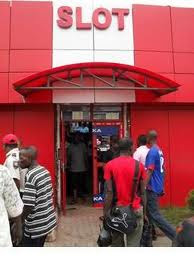 Other Branches of Slot Systems Nigeria Include:
Phone No: 07028863074
Lagos - State.
COMPUTER VILLAGE BRANCH
15/19 Ola-Ayeni Street. Ikeja Lagos
Phone No: 07029291903, 01-8228716
AKURE BRANCH
33, Oyemekun Road Opposite Wema Bank, Akure
Phone No: 08033035850
Ondo - State
PORT-HARCOURT BRANCH 1
Lenus Shopping Plaza, Abacha Rd.
Phone No: 07029333643
PORT-HARCOURT BRANCH 2
Aba Road, Waterline Roundabout
Phone No: 07029333643
OSHODI BRANCH
Arena Complex, Shop C5, 01, 02, 19 & 20
Bolade bus-stop, oshodi
Lagos
Phone No: 08191350602, 01-7384211
GSM VILLAGE BRANCH
Block A, Shop 2 Airport Bus-stop.
Phone No: 07028415477
ABUJA BRANCH
Suite C16/17 New Bannex Plaza
Wuse 2.
Phone No: 07028950193
VICTORIA ISLAND BRANCH
13A, Saka Tinubu Street.
Phone No: 07028864634
ABEOKUTA BRANCH
19 Lalubu road
Oke-ilewo
Abeokuta, ogun state
08191432299
IBADAN
Mokola roundabout
MRS filling station
02-8771730,08169408595,08033456672
EKET
68, Eket Oron road
Eket, Akwa-Ibom State
07042774461
UYO
Plot 69, line A
NDDC road, Ewet Housing Estate
Uyo
08191846151,085-828933,085-828944
FESTAC
51 road, 512 junction, festac town lagos
07031543570, 08190409086
CALABAR
18 Ndidem Usiang iso
besides Lions club park
calabar
08191846150,08133553359
You can view the Price List Of Mobile Phones Sold At Slot Nigeria so you can know the prize range of their products and possibly how much you will be budgeting.
When it comes to selling ORIGINAL mobile phones, Slot Systems Nigeria is the best. You buy mobile phones with full guarantee and of course receive some bonus on customer care related services. You can try them out today to have your own experience! To help you narrow down your search, I added some branches of Slot Nigeria for those living very far from Lagos. However, this post was primarily targeted for Lagos State residents.
Where is Slot Systems Nigeria Located in Lagos State?
Slot Systems Nigeria is primarily situated in Ikeja, the State Capital
of Lagos State. You can get them precisely at the address below:SLOT SYSTEMS NIGERIA
Phone No: 01-7388168, 08034620000
See below the front side of Slot Systems Outlet in Lagos as at the time of this post:
APAPA BRANCH
95, Kofo Abayomi street, Opp. Ceaser's Palace, Apapa Wharf.Phone No: 07028863074
Lagos - State.
COMPUTER VILLAGE BRANCH
Phone No: 07029291903, 01-8228716
AKURE BRANCH
Phone No: 08033035850
Ondo - State
PORT-HARCOURT BRANCH 1
Phone No: 07029333643
PORT-HARCOURT BRANCH 2
Phone No: 07029333643
OSHODI BRANCH
Bolade bus-stop, oshodi
Lagos
Phone No: 08191350602, 01-7384211
GSM VILLAGE BRANCH
Phone No: 07028415477
ABUJA BRANCH
Wuse 2.
Phone No: 07028950193
VICTORIA ISLAND BRANCH
Phone No: 07028864634
Lagos
ABEOKUTA BRANCH
Oke-ilewo
Abeokuta, ogun state
08191432299
IBADAN
MRS filling station
02-8771730,08169408595,08033456672
EKET
Eket, Akwa-Ibom State
07042774461
UYO
NDDC road, Ewet Housing Estate
Uyo
08191846151,085-828933,085-828944
FESTAC
07031543570, 08190409086
CALABAR
besides Lions club park
calabar
08191846150,08133553359
What Brands of Phones Can Be Found at Slot Systems Nigeria?
Like I said earlier, Slot Systems Nigeria is a home for all your mobile
phone needs. They have all kinds of mobile phones ranging from
BlackBerry, Iphones, Nokia phones, Samsung, LG, Sony Ericsson, etc. When
you get there you will have many choice to make!
Can I View Products and Service of Slot Nigeria Online?
Of course you can. Their website address is http://www.slotlimited.comYou can view the Price List Of Mobile Phones Sold At Slot Nigeria so you can know the prize range of their products and possibly how much you will be budgeting.
How To Personalize Your Gmail with Different Themes
Gmail by default has a simple look which of course is very professional
for most people. While it is programmed to appear simple and promising,
there are also an option to freely personalize it with different themes.
Google has remained the number one when it comes to making their
products counts and Gmail being its free email service is not left
behind. In this post, I will showing you a very simple way of
personalizing your Gmail account with several beautiful themes which you
can play with until you find the best of them or the one that suits
your taste. Lets see the screen-shot of some these themes:

Remember, I said it very simple, and simple it is!
Step 1: Log into Gmail.com and sign in using your Gmail address
Step 2: Once you are on Inbox click on "Settings" on the left side of your Inbox and go to "themes" section.
Step 3: Select from the several themes and you are done!
Enjoy your newly personalized Gmail Account! Cheers!
How To Personalize Your Gmail Inbox
Step 1: Log into Gmail.com and sign in using your Gmail address
Step 2: Once you are on Inbox click on "Settings" on the left side of your Inbox and go to "themes" section.
Step 3: Select from the several themes and you are done!
Enjoy your newly personalized Gmail Account! Cheers!
How to Generate Google Analytics Tracking Code [Theory and Video Tutorial]
Today we shall be looking at how you can generate your blog Google Analytics tracking code using the theoretical and video approach. I
decided to make this post following the experience I had when I was fond
of changing templates on my blogs.
Each time you make changes or upload a new template to an existing blog containing a Google analytics code, the change affects the tracking code, which means you will be having problem of tracking the activities on your blog.
Now because you only get to generate the tracking code the straight way only when you are adding the code for the first time, it is not the same when you want to generate it again. Hence, this post will help you learn the means of generating your blog Google analytics code.
Step 1: Go to http://www.google.com/analytics/ and sign in using the email address you used to open your blog
Step 2: Once you are logged on your account, your account profile will display just like the screen-shot below"
 As indicated on the screen-shot above, click on +Add new profile" and then proceed to the next step
Step 3: The next step will prompt you to choose an existing profile or create an entirely profile to generate the code. Select the "add a profile for a new domain" option and fill enter your blog URL in the form www.yourblogname.com (in my case it would be www.naijatechblog.com) See the screen-shot below:

Step 4: Also follow the arrows as they have been added on the screen-shot above to complete the process. Select the "add a profile for a new domain > type in the domain name or URL of your blog > type in your country and finally hit the "Continue button below it.
Step 5: The Google Analytics Tracking Code will immediately be generated for you which will look like the one below:
Step 6: Paste the code immediately before the </body> tag or immediately before the <head> tag of your page, make sure not to alter the code, leave it the way it is.
Allow Google some hours to gather data from your blog, so that your blog's status can be ascertained.
If you find it hard following my steps above (which I doubt you will have) then proceed to the video tutorial below:
Each time you make changes or upload a new template to an existing blog containing a Google analytics code, the change affects the tracking code, which means you will be having problem of tracking the activities on your blog.
Now because you only get to generate the tracking code the straight way only when you are adding the code for the first time, it is not the same when you want to generate it again. Hence, this post will help you learn the means of generating your blog Google analytics code.
Step 1: Go to http://www.google.com/analytics/ and sign in using the email address you used to open your blog
Step 2: Once you are logged on your account, your account profile will display just like the screen-shot below"
Step 3: The next step will prompt you to choose an existing profile or create an entirely profile to generate the code. Select the "add a profile for a new domain" option and fill enter your blog URL in the form www.yourblogname.com (in my case it would be www.naijatechblog.com) See the screen-shot below:
Step 4: Also follow the arrows as they have been added on the screen-shot above to complete the process. Select the "add a profile for a new domain > type in the domain name or URL of your blog > type in your country and finally hit the "Continue button below it.
Step 5: The Google Analytics Tracking Code will immediately be generated for you which will look like the one below:
<script type="text/javascript">
var gaJsHost = (("https:" == document.location.protocol) ? "https://ssl." : "http://www.");
document.write(unescape("%3Cscript src='" + gaJsHost + "google-analytics.com/ga.js' type='text/javascript'%3E%3C/script%3E"));
</script>
<script type="text/javascript">
try{
var pageTracker = _gat._getTracker("UA-xxxxxx-x");
pageTracker._trackPageview();
} catch(err) {}
</script>
var gaJsHost = (("https:" == document.location.protocol) ? "https://ssl." : "http://www.");
document.write(unescape("%3Cscript src='" + gaJsHost + "google-analytics.com/ga.js' type='text/javascript'%3E%3C/script%3E"));
</script>
<script type="text/javascript">
try{
var pageTracker = _gat._getTracker("UA-xxxxxx-x");
pageTracker._trackPageview();
} catch(err) {}
</script>
Step 6: Paste the code immediately before the </body> tag or immediately before the <head> tag of your page, make sure not to alter the code, leave it the way it is.
Allow Google some hours to gather data from your blog, so that your blog's status can be ascertained.
If you find it hard following my steps above (which I doubt you will have) then proceed to the video tutorial below:
<script type="text/javascript">
var _gaq = _gaq || [];
_gaq.push(['_setAccount', 'UA-35006320-1']);
_gaq.push(['_trackPageview']);
(function() {
var ga = document.createElement('script'); ga.type = 'text/javascript'; ga.async = true;
ga.src = ('https:' == document.location.protocol ? 'https://ssl' : 'http://www') + '.google-analytics.com/ga.js';
var s = document.getElementsByTagName('script')[0]; s.parentNode.insertBefore(ga, s);
})();
</script>
var _gaq = _gaq || [];
_gaq.push(['_setAccount', 'UA-35006320-1']);
_gaq.push(['_trackPageview']);
(function() {
var ga = document.createElement('script'); ga.type = 'text/javascript'; ga.async = true;
ga.src = ('https:' == document.location.protocol ? 'https://ssl' : 'http://www') + '.google-analytics.com/ga.js';
var s = document.getElementsByTagName('script')[0]; s.parentNode.insertBefore(ga, s);
})();
</script>
Wednesday, 19 September 2012
Sony to sell slimmer PlayStations to help boost sales

Sony is launching two slimmer versions of its PlayStation 3 console to boost sales of the ageing games machine.
One version will feature 12 gigabytes of flash memory, allowing it to become the cheapest PS3 to date. The other has a 500GB hard disk and will be sold for roughly the price of the previous 320GB model.
The PS3 has been outsold by Microsoft's Xbox 360 for 20 months running in the US - the world's biggest games market, according to data from NPD.
Demand for the portable games console - the PlayStation Vita - has also been weaker than expected, forcing Sony to cut sales forecasts.
The firm reported a 24.6bn yen ($314m; £202m) net loss for the April-June period, adding to a 456.7bn yen ($5.7bn; £3.5bn) deficit for the previous financial year.
It also faces the imminent launch of Nintendo's next-generation console.
The Wii U goes on sale in the US on 18 November and in Europe 12 days later, giving its maker an advantage in the busy Christmas shopping period.
Cutting costs Sony says the revised models are less than half the size and weight of the original PS3 launched in 2006, and a 20-25% reduction on the previous models.
The 500GB version will go on sale on 28 September in the UK and the 12GB device on 12 October.
One industry watcher said the move would help Sony in the run-up to Christmas.
"A smaller form factor is not only more attractive to many consumers, it will cost less to manufacture, ship and stock," Piers Harding-Rolls, head of games at IHS Screen Digest, told the BBC.
"That is likely to open the door to better margins and will allow Sony a chance to be more aggressive on pricing running into 2013."
Mr Harding-Rolls added that while Microsoft had outperformed Sony in the US, the picture was different elsewhere.
According to data from IHS, Sony sold four million PS3s in the first half of 2012 across Europe, the US, Australia and Japan, while Microsoft sold three million Xbox 360s.
Family friendly? HMV is offering the 12GB device for £185 - it charged £200 for the 160GB PlayStation Slim.
Sony indicated that the lower price might help the device appeal to families - the same "casual gamer" audience typically targeted by Nintendo.
 The Diggs Nightcrawler Wonderbook allows users to investigate Humpty Dumpty's "downfall"
The software includes a new Harry Potter title and a Walking With Dinosaurs release based on the BBC documentary series.
"The Nintendo brand is very strong with the family audience but Sony is throwing its weight behind marketing Wonderbooks this Christmas," said Christopher Dring, associate editor of the MCV video games trade news magazine.
"Bearing in mind Sony's hardware will also likely be cheaper and it also has other family stuff like Singstar - a karaoke game that appeals to a young audience - there could be a big fight over the next few months."
Science And Technology: YouTube under new pressure over anti-Muslim film
Science And Technology: YouTube under new pressure over anti-Muslim film: Saudi Arabia has become the latest state to call on YouTube to block access inside the country to anti-Islamic film Innocence of Musli...
YouTube under new pressure over anti-Muslim film

Saudi Arabia has become
the latest state to call on YouTube to block access inside the country
to anti-Islamic film Innocence of Muslims.
The government says it will block access to the entire YouTube website if owners Google do not comply.Google has already rejected a request from the White House to remove the film, but has blocked access to it in Libya, Egypt, Indonesia and India.
The firm says it is acting in countries where the material is illegal.
In an official statement, King Abdullah said the website would be blocked if Google did not agree to remove links to the controversial film.
The country's Communications and Information Technology Commission also called on Saudi citizens and expats to report any links they found to the "defaming" film.
"This is considered a duty imposed by our true religion on every Muslim, necessitating the prevention of any blaspheming reports to our Prophet (peace be upon him) and to our true religion," said a statement released via the state press agency SPA.
Russia row The Russian government has also asked for the material to be blocked.
A court in Russia is currently considering whether to classify the film as "extremist".
If it is classified as extremist, the entire YouTube website will be blocked under controversial new legislation due to commence on 1 November.
Under the new law, digital content deemed extremist or offensive will be put on a nationwide blacklist and blocked by all internet service providers in the country.
"It sounds like a joke, but because of this video... all of YouTube could be blocked throughout Russia," Russian Communications Minister Nikolai Nikiforov wrote on Twitter.
"If there is a court decision and YouTube does not take off the video, then access will be limited."
'Extreme' response Jim Killock, executive director of the Open Rights Group, said such a ban would be "an extreme and disproportionate response" by the country.
"This is an extremely strange case - we have one individual's take being characterised as the position of the US government for political purposes and we really need to have a real discussion of why that is taking place and whether it is ever reasonable," he told the BBC.
"But the companies involved should resist such requests, except when ultimately they will obey national laws and that is completely reasonable."
A YouTube representative told the BBC: "We work hard to create a community everyone can enjoy and which also enables people to express different opinions. This can be a challenge because what's OK in one country can be offensive elsewhere."
"This video - which is widely available on the web - is clearly within our guidelines and so will stay on YouTube. However, we've restricted access to it in countries where it is illegal such as India and Indonesia as well as in Libya and Egypt given the very sensitive situations in these two countries.
"This approach is entirely consistent with principles we first laid out in 2007."
Google guidelines Those principles include a worldwide ban on child pornography.
But Rachel Whetstone, Google's director of global communications and public affairs for Europe, the Middle East and Africa, has written in a blog post that Google was not "the arbiter of what does and does not appear on the web".
"We try to take into account local cultures and needs - which vary dramatically around the world - when developing and implementing our global product policies," she said.
"Dealing with controversial content is one of the biggest challenges we face as a company."
HTC aims to avoid One X mistakes with new mobiles

You know a company has problems when one of its executives calls to tell you it is facing "challenges" and needs to be "bolder".
It has not been a good year for Taiwanese smartphone maker HTC. Profits have slumped on weak sales - the firm recently reported that revenues for July were 45% down on the year. At one point its share price was as much as 80% below April 2011's level, before it made a slight recovery.
A recent leaked memo from chief executive Peter Chou revealed the extent of his concerns.
"HTC used to be a company where we did things quick and reacted quick," he wrote.
"However, the fast growth from the last two years has slowed us down... we agreed to do something, but we either didn't do it or executed it loosely."
Second to Samsung Such self-recrimination is usually only heard after a firm's products miss the mark.
What makes HTC's circumstances remarkable is that the firm's flagship handset - the One X - has been lauded since its release in April.
"It's one of the best mobile devices I've ever used," said influential tech news site The Verge in its review. Engadget went further, describing it as "a masterpiece".
UK gadget site, Pocket-lint was also fulsome with its praise, giving the device the same score as Samsung's top-selling Android device, the Galaxy S3.
"In real life they are very closely matched," Chris Hall, Pocket-lint's editor tells the BBC.
 HTC's boss, Peter Chou, sent a memo telling staff to "kill bureaucracy" to make the firm more nimble
A popular top-end device is supposed to provide a "halo effect", boosting sales for an entire product range.
Yet data from IDC suggests that HTC shipped 9.1 million smartphones worldwide between April to June, a 24% drop on the year.
By contrast Samsung shipped 50.3 million handsets, a 173% rise.
So what went wrong?
"The market changed," says Jason Mackenzie, HTC's president of global sales and marketing.
"There's far fewer consumers who are going into the retail stores undecided about what they want to buy.
"Most of our research suggests about 70% of consumers are walking into the store already knowing what they want to buy... so we don't have the luxury in a significant percentage of times to be able to actually put the HTC One in the consumer's hands."
If this analysis is correct it all comes down to marketing - a problem for HTC which admits its budget is about a sixth the size of its South Korean rival.
"We cannot market like a Samsung - or Apple - where you've just got brute force tactics, carpet bombing the airwaves with TV commercials," says Mr Mackenzie.
"We've got to be more creative and act and speak like a challenger."
Skydivers The problem, says one telecoms analyst, was that what budget HTC did have was spent on the wrong message.
"They had a rather spectacular but somewhat nebulous campaign of good-looking skydivers jumping out a plane in Arizona," says Ben Wood of CCS Insight.
 HTC's TV advert featured skydiving smartphone users, but little information about the handset itself
"The other thing is that previously operators had liked HTC products, liked the HTC people and therefore made promises in terms of supporting them.
"But in the case of the One X it almost felt like the operators had been invited to a better party - the Galaxy S3 with Samsung's eye-watering marketing budget - and they dropped HTC like a stone."
Manoeuvre to Microsoft Samsung may have become the dominant Android smartphone player, but the upcoming launch of Windows Phone 8 presents HTC with a fresh opportunity.
Although it already sells two phones powered by the operating system's predecessor - Windows Phone 7 - they were never the focus of its efforts. That has helped the operating system become more closely associated with Nokia - something HTC intends to change.
"We will have two flagships," says Mr Mackenzie.
"For Windows Phone 7 we didn't provide enough differentiation to have that flagship status between what we were doing on Windows Phone 7 and what we were doing on Android. When we look at the market we think that was a mistake from us and from our competitors as well."
HTC's relationship with Microsoft goes back 12 years to the Compaq iPaq - one of the first colour touchscreen pocket computers.
 HTC plans to challenge the Nokia Lumia 920's claim to be the flagship Windows Phone 8 handset
But a decision to build the T-Mobile G1 in 2008 - the world's first Android phone - heralded a change in strategy.
Although HTC never broke ties with Microsoft, over recent years its links to Google have been stronger. A decision to recalibrate that position carries both risks and potential rewards.
"What HTC is hoping - as Nokia is hoping - is that there will be momentum around Windows Phone because of the huge amount of expenditure that Microsoft is making to market all the Windows 8 products," says Ben Wood.
"But I am concerned that consumers will find Windows 8 on PCs a rather daunting challenge because it's such a significant shift from Windows as they know it today, and therefore there's a danger of collateral damage to Windows Phone 8 if people decide to wait before jumping in."
HTC's decision to switch the focus of its marketing efforts to the internet, where it plans to educate users about what its devices do, may help - its strategy will become clearer after a press event in New York this Wednesday where it will launch new devices.
Certainly, one industry watcher says there is still time for a turnaround.
"HTC did a lot to bring Android into the mainstream and then Samsung catalysed on that to catapult into the top spot," says Pocket-lints's Chris Hall.
"But things go up and down in tech. We have seen the rise of Apple and the decline of Microsoft - going forward there's a chance that could switch, benefiting HTC in the process."
Motorola's first Intel-powered handset launches in UK

The BBC's technology correspondent Rory Cellan-Jones takes a look at the Razr i with Motorola's Mark Notton
Google's Motorola unit has released its first Intel-powered smartphone.
The Razr i is based on a mid-range model sold in the US that features an ARM-based Snapdragon processor.Motorola said the change of chip meant improved camera performance. However, it has also meant Google's Chrome browser is not installed on the device.
Intel recently cut its sales forecasts citing weaker demand. Although it dominates PC chip sales it is a niche player in the smart device sector.
 The handset is Motorola's first to feature an Intel processor
So, Intel's tie-up with Google - which also makes the Android system - is widely seen as its most significant effort to crack the market to date.
The handset will be offered in the UK, France, Germany and Latin America.
It has a 4.3in (10.9cm) display making it bigger than Apple's iPhone 5, but smaller than Samsung's top-selling Galaxy S3 and HTC's One X.
Chrome compromise The Motorola device features a new Intel Atom chip which runs at 2 gigahertz - an improvement on the 1.6GHz model included in an Orange-branded model launched in the UK in May.
Intel said the chipset also included a new image signal processor that had been specifically optimised to work with Motorola's technology.
"You can be ready to take a picture in less than one second, which is about twice as fast as other products on the market," Eric Reid, general manager of Intel mobile and communications group, told the BBC.
"A lot of times you want to take multiple pictures - and you can take up to 10 pictures in a second, which is faster than many DSLRs (digital single lens reflex) cameras on the market today."
However, the inclusion of Intel's technology has meant that Google has not been able to offer Chrome as the default web browser, as it does with the handset's US counterpart, the Droid Razr M.
"Chrome is not ready for pre-loading on this device," acknowledged Jim Wicks, senior vice president of consumer experience design at Motorola.
 Intel's current Atom processors use a single CPU core
He added that users would be able to download the software from the Google Play store as an option. The firm markets the software as having "hardware-accelerated page rendering" on ARM-based chips.
Battery life Intel opted to use a single-core CPU (central processing unit) design for its latest chip, bucking an industry trend for dual or quad-core models.
Multiple cores allow handsets to maximise battery life by only using all of the cores when they are carrying out processor-intensive tasks, but switching some of them off at other times to save energy.
Intel said it had instead used a technique it called hyper-threading which allowed its single core to carry out two tasks in parallel. It said this allowed it to complete calculations more quickly, and thus shut down the processor down faster.
"Not all cores are created equal," said Mr Reid.
"It's really about what the architecture can do and how you do it in the most efficient fashion.
"We found with the Atom processor we can deliver performance on our processor that actually beats many of the dual core processors on the market today."
Motorola said it had also included its own Smart Actions software to help the device achieve about a 20-hour lifespan between charges. The utility is not offered to other Android device makers.
 Motorola's top-end Razr Maxx uses a dual-core CPU made by Qualcomm
"You might get up to 15% to 20% more battery life out of our devices as a result," Mr Wicks said.
Mid-range mobiles One industry watcher said it was noteworthy that Intel had deliberately decided not to target its chip at Motorola's top-end handsets.
"It may look strange that a computing company like Intel would position itself with a mid-range device," said Malik Saadi - principal analyst at Informa Telecom.
"But there is less competition in that segment, and many of the other device at that price point are lower performance, so it will get noticed.
"Intel is trying to enter the mobile market in a modest way... We expect it will launch a more expensive multi-core processor in 2013, although we don't know the partner."
Mr Wicks confirmed that Motorola planned to offer further Intel-based handsets over the coming years, but would not discuss whether they would also be restricted to markets outside the US.
Mr Reid added that Intel planned to announce further tie-ups with manufacturers before the end of 2012.
Microsoft warns on previously unseen IE bug

Microsoft has released a temporary software fix for a newly discovered bug in its Internet Explorer web browser.
The problem, which affects hundreds of millions of IE browser
users, is being used by attackers to install the Poison Ivy trojan.This piece of malware is used to steal data or take remote control of PCs.
Microsoft moved quickly to address the issue. In a blog post, it said that it was "working to develop a security update".
So-called zero-day, or newly discovered, vulnerabilities are rare. According to security firm Symantec, only eight such bugs were spotted in 2011.
Symantec research manager Liam O Murchu said they were dangerous to users because they were new.
"Any time you see a zero-day like this, it is concerning.
"There are no patches available. It is very difficult for people to protect themselves."
Alternative browsers The flaw was spotted by Luxembourg-based security expert Eric Romang, when his PC was infected by Poison Ivy last week.
Microsoft told users to download a free patch, the Enhanced Mitigation Experience Toolkit, as a temporary solution while the company continued to work on a long-term fix.
But experts warned the new software must be downloaded and manually configured, making it cumbersome for many ordinary users.
Some advised users to switch to alternative browsers, such as Google's Chrome or Mozilla's Firefox while the bug was being fixed.
It is expected that producing a proper update will take about a week.
Dark energy camera snaps first images ahead of survey
The most powerful
sky-scanning camera yet built has begun its quest to pin down the
mysterious stuff that makes up nearly three-quarters of our Universe.
The Dark Energy Survey's 570-million-pixel camera will scan some 300 million galaxies in the coming five years.The goal is to discover the nature of dark energy, which is theorised to be responsible for the ever-faster expansion of the Universe.
Its first image, taken 12 September, focussed on the Fornax galaxy cluster.
In time, along with its massive haul of individual galaxies, it will study 100,000 galaxy clusters - the largest stable structures we know of - and 4,000 supernovae, the bright dying throes of stars.
This enormous survey is a collaboration between US, UK, Brazilian, Spanish and German astronomers.
The phone box-sized Dark Energy Camera or DECam is mounted on the 4m Victor M Blanco telescope at the Cerro Tololo Inter-American Observatory in Chile's Atacama desert.
While it is not the highest-resolution camera - that honour goes to the Pan-Starss instrument in Hawaii - its high resolution and extraordinary sensitivity make it arguably the world's most powerful camera.

More distant objects are moving away from us -
and each other - faster than nearer objects, which causes a shift of
their apparent colour toward the red end of the spectrum - a "redshift".
But the very stretching of space can cause the same effect.
Careful studies of the shifted light from distant supernovae
were what first demonstrated this expansion of the Universe, leading to the 2011 Nobel prize in physics.What is believed to be causing this increase in the speed of expansion is called dark energy, making up more than 70% of the mass-energy - all of the "stuff" - of the Universe and the focus of the DECam's mission.
Other efforts hope to get to the bottom of the mystery, including the Boss survey and a future space telescope dedicated to the effort called Euclid.
But for now, Will Percival from the University of Portsmouth, a Dark Energy Survey collaborator, said DECam is an exciting prospect.
"This will be the largest galaxy survey of its kind, and the galaxy shapes and positions will tell us a great deal about the nature of the physical process that we call dark energy, but do not currently understand," he said.
The survey will tackle the problem in four ways.
It will study the same kind of supernovae that led to the Nobel prize, in a bid to unravel the "expansion history" of the Universe - when its expansion increased and decreased over billions of years.
It will also map out in 3D the distribution of galaxy clusters, measuring what are known as baryon acoustic oscillations - literally relics of the sound echoes of the Big Bang.
Continue reading the main story

Dark energy and dark matter mysteries
- Gravity acting across vast distances does not seem to explain what astronomers see
- Galaxies, for example, should fly apart; some other mass must be there holding them together
- Astrophysicists have thus postulated "dark matter" - invisible to us but clearly acting on galactic scales
- At the greatest distances, the Universe's expansion is accelerating
- Thus we have also "dark energy" which acts to drive the expansion, in opposition to gravity
- The current theory holds that 73% of the Universe is dark energy, 23% is dark matter, and just 4% the kind of matter we know well
By counting the clusters and
plotting out when they evidently formed, the survey can feed back to
computer models that map out how we think the Universe organised itself
in its earliest years.
And studies of the way galaxies and galaxy clusters bend
passing light - in a process called weak gravitational lensing - will
help to pin down the equally mysterious "dark matter" that is believed
to make up more than 80% of the Universe's mass - most of the Universe's
stuff that is not energy. DECam will now be run through a series of tests and will begin the official survey in December.
With each snapshot it acquires, it will see an apparent area of the sky 20 times larger than the full moon.
In its full five-year run, it should capture an eighth of the full sky.
"The achievement of first light through the Dark Energy Camera begins a significant new era in our exploration of the cosmic frontier," said James Siegrist, associate director of science for high-energy physics at the US Department of Energy, which oversaw the instrument's construction.
"The results of this survey will bring us closer to understanding the mystery of dark energy and what it means for the
Agent Orange chemical in GM war on resistant weeds

A US pharmaceutical
company is set to introduce a controversial new genetically modified
corn to help farmers fight resistant weeds.
Dow Agrosciences says its new GM product will use a chemical
that was once a component of the Vietnam war defoliant, Agent Orange.It is needed they say because so called "superweeds" are now affecting up to 15 million acres of American crops.
Dow argues the new approach is safe and sustainable.
For a farmer like Jeremy Leech who grows corn and soybeans
near Humboldt, Nebraska, resistant weeds are a constant threat to his
farm and his family. Last year he spent around $7,500 on chemical sprays to combat the threat to his crops.
The herbicide failed to kill the giant ragweed that had grown on his land, strangling his soybeans and his income. Worse, the pungent pollen from the towering pests exacerbated his eight year-old daughter's asthma.
"When that stuff is pollinating it makes it hard for her to breathe outside and when you live on a farm you know the kids play outside all the time and they love it and when that pollen gets really bad she gets choked up," he says.
Farming revolution Thousands of farmers across the US now face similar problems with weeds that can withstand powerful herbicides. Scientists say it is because of the success of GM crops that were introduced in the mid 1990s.
Monsanto became a world leader in the field thanks to the introduction of Roundup-ready corn and soybeans. These crops were engineered to be able to survive spraying with glyphosate, a chemical marketed as Roundup.
 Jeremy Leech has battled resistant weeds on his Nebraska farm.
"Roundup was the one that was supposed to do wonders," says Jeremy Leech's father, Van.
"And it did for the first few years; anybody could raise clean beans. Obviously over the last few years, bean fields are beginning to look more and more like this," he says, pointing to a field where weeds tower over shrunken crops.
To see how bad the weed problem can get, I travelled to an experimental plot near David City run by the University of Nebraska with Prof Stevan Knezevic.
We stand in a cornfield surrounded by towering green plants. But there is not an ear of corn in sight. The stalks that surround us are Giant Ragweed, one of the "dirty dozen" weeds that have acquired resistance to Roundup.
 Harvesting corn on the Leech farm in Nebraska
These plants suck the light and the life from the crops. Just one resistant weed every 10 square metres can reduce the yields from productive plants by 50%.
"Over the past 15 years I said that if we continued using roundup, roundup roundup, we're going to have a problem - now we have that problem," says Prof Knezevic.
"The reason why we are here is that we all mismanaged this technology."
Back to the future Recognising the scale of the problem, the biotechnology industry believes that newer more effective forms of GM are the solution. Dow Agrosciences is now seeking US government approval for the Enlist weed control system.
Instead of the crop being resistant to one chemical, it is engineered to resist two. Dow says this is a more effective solution because it allows farmers to mix and match their sprays more effectively, making for a far more sustainable system.

2,4-D is currently utilised as a herbicide in agriculture, though it is used sparingly because it is highly toxic. The change here would expand options for farmers to use 2,4-D.
Although it was is one of two chemical ingredients in Agent Orange, the chemical was not implicated in causing the devastating health impacts suffered by many people exposed to the defoliant.
Continue reading the main story

Alternative approaches
- Bright orange flames shoot from the back of a propane powered weed burner as it trundles slowly across a field. This is a modern demonstration at the University of Nebraska of an old technique
- According to the university's Prof Stevan Knezevic, around 70,000 farming families in the US used flaming as their main defence against weeds in the 1950s
- The device is still popular with organic farmers who have few chemical sprays that they can utilise. But according to Dr Knezevic the rise of weed resistance is increasing interest from conventional farmers as well
- This prototype can concentrate flames at temperatures up to 1,100C, sufficient to kill most weeds
- "Any weeds that come from a seed, you can smoke it... Literally," says Prof Knezevic
Prof Dallas Peterson of Kansas
State University who has co-operated with Dow in the past says this
makes the chemical very suitable for working in combination with others.
"It is an old herbicide, one of the oldest synthetic
herbicides around; we've used it for over 50 years in many different
situations and to quite a large degree, and we haven't had many cases of
resistance develop yet," he explains.The US Environmental Protection Agency says that 2,4-D is safe for use in farming. The Department of Agriculture is expected to shortly grant final approval for planting next spring.
But weed scientists are concerned that if farmers are not educated to use the new GM product properly, resistance issues will soon re-appear.
"It will certainly help with weed resistance; it's a new mode of action," says Prof Dallas Peterson.
"But it's not a silver bullet - and if we utilise the technology too extensively and rely on it too exclusively, eventually we will develop resistance."
Back on the farm in southeastern Nebraska, Jeremy Leech is carefully cleaning his combine harvester to make sure he does not transport resistant seeds from one field to the next. He is also sceptical that a new GM alone is the answer.
"To me, it's a short-term fix. I think 2,4-D will work fine, but what I'm afraid is what's going to happen 4-5 years down the road if we keep using it. I think we 'll have the same problems we have now with Roundup."
 These giant ragweeds have grown tall despite the application of herbicide
"When we grow Roundup-ready corn and rotate it with Roundup-ready soybeans the biodiversity is out of the window," says Prof Knezevic.
"It's just two crops, same chemical. We need more biodiversity if the biotech bandwagon is to succeed, like the organic farmers who rotate their crops more."
Ironically, the future of GM may well depend on re-incorporating some of the older skills that the technology once threatened to replace.
Tuesday, 18 September 2012
Maiden shows signs of TB-like infection

As she climbed to her death, the immune system of a 15-year-old Incan girl known as the Maiden was combating a bacterial infection caused by a type of Mycobacterium, an analysis indicates. Angelique Corthals, a forensic anthropologist at the City University of New York, and colleagues report the findings online July 25 in PLoS One.
La Doncella, as the Maiden is called in Spanish, was one of three children whose mummified remains were found near the summit of Llullaillaco volcano in Argentina in 1999. She, a younger girl and young boy were probably sacrificed in a ritual called Capacocha. But the exact cause of the children’s deaths has remained a mystery; their perfectly preserved mummies show no signs of violent trauma.
Corthals wanted to know whether the children were given a fermented corn drink called chicha, which was used to numb sacrifice victims as part of the Capacocha ritual. The alcohol in the drink would have evaporated almost immediately, but the children might still have traces of corn clinging to their lips, she reasoned. Researchers swabbed blood and saliva from the lips of the Maiden and the boy, and snipped off a small piece of the boy’s blood-soaked cloak for testing using a technique that identifies proteins contained in the samples. The younger girl’s face was damaged by a lightning strike after burial, so the researchers couldn’t include her in the study.
Coauthor Antonius Koller of the State University of New York Stony Brook Medical Center and his colleagues determined which proteins were present in the samples. There was no sign of corn liquor, Corthals says, but the protein profile indicated clearly what the two mummies’ immune systems had been up to at the time of death.
The Maiden’s immune system was more active than the boy’s was, and her swabs contained immune system proteins indicating a chronic lung infection. Modern people fighting off Mycobacterium diseases such as tuberculosis make similar proteins. DNA evidence showed that the girl was carrying some type of Mycobacterium, although the researchers can’t yet nail down which species of the bacterium was infecting her.
The new findings are consistent with radiological exams showing signs of lung and sinus inflammation in the Maiden. The boy showed no signs of active infection.
Other researchers are sure to latch onto the new research approach described in the study, says Robert DeSalle, of the American Museum of Natural History in New York City. “It is going to be the first paper among probably a lot to come looking at infectious diseases among dead people,” he says. He predicts that examining the immune systems of long-dead creatures may also help solve some archaeological debates, such as whether woolly mammoths were victims of overhunting or disease.
North African Diaspora written in genes
Historical Jewish migrations out of the Middle East about 2,000 years
ago can also be traced in the DNA of people living in Africa and
Southwest Asia today.
These distinctive genetic signatures bolster historical accounts that there were waves of Jewish migration out of the Middle East into neighboring regions. Human geneticist Harry Ostrer of Albert Einstein College of Medicine in New York City and colleagues report their analysis of 509 people from 15 Jewish populations online August 6 in the Proceedings of the National Academy of Sciences, focusing their attention on communities in North Africa, Ethiopia, Yemen and the Caucasus.
Geneticists have previously traced movements of Jewish groups in Europe and the Middle East (SN: 7/3/10, p. 13; SN: 1/3/09, p. 12), but few studies have focused on Diaspora groups in other regions.
Jews settled in Tunisia more than 2,000 years ago, and genetic signatures carried from the Middle East are still evident in Tunisian Jews today, the researchers found. Together with Djerban and Libyan Jews, the Tunisian Jews form a separate genetic branch from Moroccan and Algerian Jews.
Jews in Morocco and Algeria bear genetic signatures characteristic of Sephardic Jews, who once lived in Spain and Portugal. The Spanish Inquisition caused the expulsion of Sephardic Jews from the Iberian Peninsula and many went to North Africa, carrying their genetic heritage with them.
DNA signatures found in Ethiopian Jews indicate that they are genetically different from Middle Eastern Jews and from the other people living in Ethiopia. The genetic evidence can’t confirm the origin tale that Ethiopian Jews are descendants of King Solomon and the Queen of Sheba, but the findings are consistent with historical accounts that local people were converted to Judaism, then spent more than 2,000 years in cultural and genetic isolation.
Yemenite Jewish people also form a separate genetic group from other Jews, consistent with conversions. “I like to think of it as both the flow of ideas as well as genes that contribute to Jewishness,” Ostrer says.
In the Caucasus, Georgian Jews are an offshoot of groups that first moved from Palestine to present-day Iran and Iraq, the new analysis shows.
Although the new study is the most in-depth of its kind, it certainly doesn’t determine who is a Jew, says Francesc Calafell, a population geneticist at the Institute of Evolutionary Biology in Barcelona. Palestinians have a similar genetic makeup to Jewish people, he points out. “Genetics is only a facet of identity.”
These distinctive genetic signatures bolster historical accounts that there were waves of Jewish migration out of the Middle East into neighboring regions. Human geneticist Harry Ostrer of Albert Einstein College of Medicine in New York City and colleagues report their analysis of 509 people from 15 Jewish populations online August 6 in the Proceedings of the National Academy of Sciences, focusing their attention on communities in North Africa, Ethiopia, Yemen and the Caucasus.
Geneticists have previously traced movements of Jewish groups in Europe and the Middle East (SN: 7/3/10, p. 13; SN: 1/3/09, p. 12), but few studies have focused on Diaspora groups in other regions.
Jews settled in Tunisia more than 2,000 years ago, and genetic signatures carried from the Middle East are still evident in Tunisian Jews today, the researchers found. Together with Djerban and Libyan Jews, the Tunisian Jews form a separate genetic branch from Moroccan and Algerian Jews.
Jews in Morocco and Algeria bear genetic signatures characteristic of Sephardic Jews, who once lived in Spain and Portugal. The Spanish Inquisition caused the expulsion of Sephardic Jews from the Iberian Peninsula and many went to North Africa, carrying their genetic heritage with them.
DNA signatures found in Ethiopian Jews indicate that they are genetically different from Middle Eastern Jews and from the other people living in Ethiopia. The genetic evidence can’t confirm the origin tale that Ethiopian Jews are descendants of King Solomon and the Queen of Sheba, but the findings are consistent with historical accounts that local people were converted to Judaism, then spent more than 2,000 years in cultural and genetic isolation.
Yemenite Jewish people also form a separate genetic group from other Jews, consistent with conversions. “I like to think of it as both the flow of ideas as well as genes that contribute to Jewishness,” Ostrer says.
In the Caucasus, Georgian Jews are an offshoot of groups that first moved from Palestine to present-day Iran and Iraq, the new analysis shows.
Although the new study is the most in-depth of its kind, it certainly doesn’t determine who is a Jew, says Francesc Calafell, a population geneticist at the Institute of Evolutionary Biology in Barcelona. Palestinians have a similar genetic makeup to Jewish people, he points out. “Genetics is only a facet of identity.”
Subscribe to:
Posts (Atom)